How Bwindi Hospital is Strengthening the One Health approach in communities surrounding Bwindi Impenetrable National Park
Overview
Uganda has experienced repeated outbreaks of infectious diseases that can pass between animals and people. Over the last two decades, the country has witnessed outbreaks of several emerging and re-emerging zoonotic diseases, including Ebola, Marburg, yellow fever, Rift Valley fever, Crimean-Congo hemorrhagic fever, and anthrax. These repeated outbreaks highlight the continued threat that zoonotic diseases pose to communities, health systems, animals, and the wider environment. Some scholars have described Uganda as a “hub” or “hotspot” for zoonotic diseases [1, 2]. Zoonotic diseases are infections that can be transmitted between animals and people. Globally, about 75% of newly emerging infectious diseases and 60% of all human infections are of animal origin [3]. The close interaction between people, animals, and the environment can create opportunities for these diseases to emerge and spread. When outbreaks are not detected and controlled early, they can develop into epidemics, putting pressure on health systems, disrupting livelihoods and economies, and causing illness and deaths among both people and animals [4].
Southwestern Uganda is particularly important in understanding and preventing these diseases. The region lies along Uganda’s border with the Democratic Republic of Congo (DRC), close to the Congo Basin, one of the world’s most biologically diverse areas. Its rich wildlife and natural environment provide important habitats for animals and can also create opportunities for pathogens to circulate. The risk can increase when people and wildlife come into closer contact, for example through tourism, hunting, farming near forest edges, and other activities that bring communities into contact with wildlife or environments where pathogens may be present. Recent events in the region demonstrate why continued preparedness and surveillance are important. As of August 1, 2026, an ongoing Bundibugyo virus disease (BVD) outbreak has been reported in the DRC, with 3,605 confirmed cases and 1,587 deaths, representing a crude case fatality ratio of 44% [5]. In Uganda, the last of the 20 people infected during the recent Ebola outbreak was discharged in July 2026.
These events demonstrate that the threat of zoonotic disease is not only a concern of the past; it remains a current regional and public-health priority. In response to this challenge, Bwindi Community Hospital is strengthening its contribution to disease prevention, surveillance, research, and outbreak preparedness. As a regional leader in research, the hospital promotes an integrated One Health approach, recognising that the health of people, animals, and the environment is closely connected. This approach brings together stakeholders working across human health, animal health, and environmental health to better understand risks, detect diseases early, and strengthen preparedness and response. This work is supported locally and through funding from the Pandemic Fund, in collaboration with partners including Gorilla Doctors, UC Berkeley, UC Davis, the Greater Virunga Transboundary Collaboration (GVTC), and UT Dallas. Together, these partnerships aim to strengthen research, surveillance, prevention, and response to zoonotic diseases and contribute to healthier and more resilient communities.
What is One Health?
One Health is a collaborative approach that recognizes the interconnectedness of human, animal, and environmental health. While not a new idea, it has become increasingly important as the ways people, animals, and the environment interact continue to change [6]. As the world evolves, so do our interactions with nature. Rapid population growth and geographic expansion have blurred the boundaries between human communities, wildlife, and livestock. This increased proximity, whether through agriculture, travel, or companionship, creates fertile grounds for zoonotic disease transmission. Consequently, from local outbreaks to global health security, these threats impact millions of lives and livelihoods every year, highlighting the urgent need for integrated health strategies [7]. Rather than reacting to health crises after they spill over into human populations, One Health brings medical professionals, veterinarians, epidemiologists, and environmental scientists together. By addressing health threats at the human-animal-environmental interface, we can prevent outbreaks before they start, build resilient ecosystems, and protect the health of all life on Earth.
Why One Health?
Human health does not exist in isolation. Over the past three decades, approximately 70-80% of emerging human infectious diseases have originated in wild or domestic animals (WHO, 2026). Across the pastoral corridors and communities bordering national parks, diseases like rabies, anthrax, and viral hemorrhagic fevers demonstrate how closely our health is tied to animal populations. At the same time, environmental factors, such as pollution and deforestation, alter ecosystems and create fertile grounds that drive the emergence of new infectious agents that impact both human and animal health.
With national projections pointing to a population of 56 million by 2030 with a growing annual rate of about 2.9% to 3.1%, the expanding demand for land, water, and food will only accelerate these environmental pressures [8]. To sustainably provide healthcare, food, and water for this growing population, it requires breaking down traditional walls. A One Health approach brings together all medical, veterinary, and environmental professions to address health threats at their roots. By detecting zoonoses in animals before they reach humans, promoting responsible antibiotic use to combat drug resistance, and safeguarding the ecosystems, we can build a strong defence system. Protecting health in the 21st century requires embracing the One Health model, which allows healthcare institutions to work alongside agriculture and environmental sectors to anticipate outbreaks, strengthen community resilience, and safeguard human lives for future generations.
What we do?
Bwindi Community Hospital (BCH) is located in a tourism area with proximity to the Bwindi Impenetrable National Park (BINP), a home to the endangered mountain Gorillas and other wildlife. The region is characterised by human–animal interactions which in turn increase the risk of zoonotic diseases. Due to human encroachment on the fragile ecosystems of the BINP, the spillover of zoonotic pathogens into border communities has increased, with worldwide implications. As a result of the concentration of human populations living near wildlife habitat and the diversity of wildlife (particularly primates and bats) and vectors that this region supports, several zoonotic viruses of global importance and impact have been first identified or newly characterised in Uganda. These zoonotic viruses include Zika, chikungunya, yellow fever, dengue, Marburg, Sudan, and Bundibugyo viruses. All these important emerging and re-emerging infectious diseases have wildlife reservoirs and/or secondary spillover hosts, underscoring the critical need for a One Health approach to acute febrile illness surveillance in this region; therefore, BCH puts efforts into these parameters.
Acute Febrile Surveillance (AFI):
To effectively protect impact communities, one health AFI surveillance must integrate with a One Health approach. BCH as a facility has both facility- and community-based surveillance using digital disease surveillance platforms where VHTs and CHWs report directly. All patients presenting with fevers and other compatible symptoms, as well as other unusual illnesses and human/animal mortality events, have to be reported for early detection of such threats. This integrated approach is crucial because early recognition and reporting of unusual illness and mortality provides critical signals of emerging or re-emerging diseases, enabling timely investigation, laboratory confirmation, and rapid public health response.
Digital disease surveillance:
To effectively protect communities, modern healthcare systems must move faster than the threats they face. Integrating digital technology into surveillance transforms how medical teams detect, track, and respond to health threats, ensuring no signal is missed even in the most remote areas. BCH developed a simple phone-based technology to enable timely identification and reporting, , supporting disease surveillance and response. Reports of human and animal illnesses or deaths are submitted by VHT areas, and our search and predict algorithm maximises predictive surveillance to prevent future zoonotic disease outbreaks. Using the machine learning and AI-supported modules, VHTs receive timely feedback and recommended preventive actions that support stopping possible outbreaks from spreading further.
Laboratory & Disease Detection
BCH integrates laboratory investigation with its One Health surveillance system to support early detection of emerging and re-emerging infections. Suspected acute febrile illnesses, unusual diseases, and human or animal mortality events reported through community and facility surveillance are investigated and, where indicated, samples are collected for laboratory confirmation. Collaboration with research and laboratory partners like Uganda Virus Research Institute supports detection and characterization of important zoonotic viruses, while linking laboratory results with epidemiological information strengthens early warning and timely outbreak response.
Employee Health Program
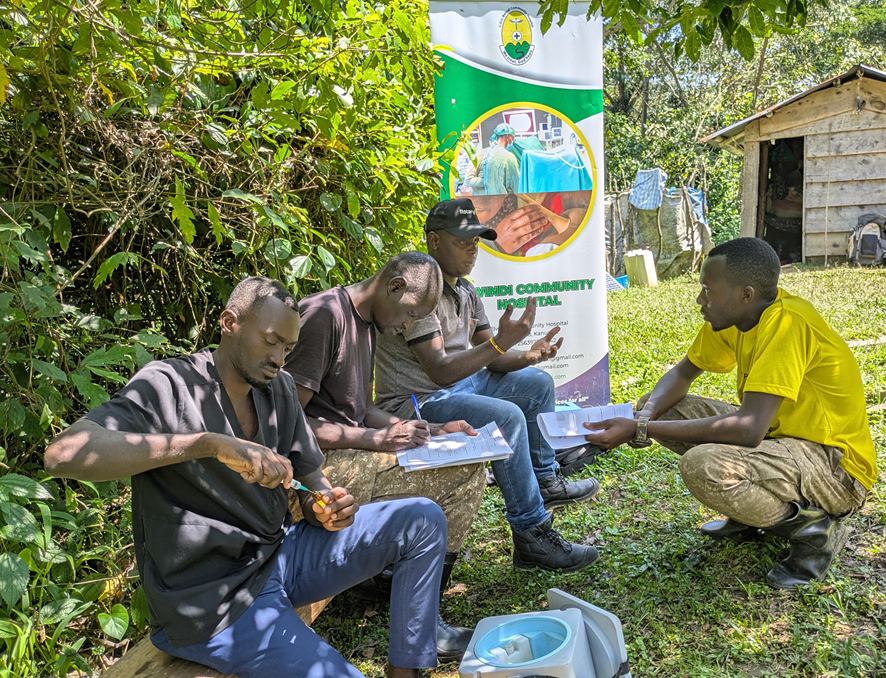
Park rangers operate at the critical intersection of human, animal, and environmental health, where constant exposure to physical hazards, wildlife, tourists, and local communities significantly elevates their risk of contracting and spreading zoonotic infections. Because their exposure puts them on the frontline of potential disease transmission, establishing dedicated employee health programs under the One Health framework is crucial. Providing ranger-tailored healthcare, including clinical screenings, targeted disease surveillance, and preventive interventions, directly safeguards the physical and mental well-being of the rangers themselves. Protecting these frontline workers simultaneously shields surrounding local communities from potential disease spillover and mitigates wider zoonotic outbreak risks. Ultimately, maintaining a healthy, resilient ranger workforce provides the necessary foundation to ensure sustained, effective wildlife conservation and community public health security.
References
1. Malimbo, M. (2014). Is Uganda a hub for zoonotic disease outbreaks? Lessons and challenges from Ebola, Marburg, Yellow fever and Anthrax outbreaks. International Journal of Infectious Diseases.
2. Buregyeya, E., Atusingwize, E., Nsamba, P., Musoke, D., Naigaga, I., Kabasa, J. D., ... & Bazeyo, W. (2020). Operationalizing the one health approach in Uganda: challenges and opportunities. Journal of epidemiology and global health, 10(4), 250-257.
3. Jones, K. E., Patel, N. G., Levy, M. A., Storeygard, A., Balk, D., Gittleman, J. L., & Daszak, P. (2008). Global trends in emerging infectious diseases. Nature, 451(7181), 990-993.
4. Nyaruaba, R., Okoye, C. O., Akan, O. D., Mwaliko, C., Ebido, C. C., Ayoola, A., ... & Oyejobi, G. K. (2022). Socio-economic impacts of emerging infectious diseases in Africa. Infectious Diseases, 54(5), 315-324.
5. World Health Organization. (2026, August 1). Ebola disease caused by Bundibugyo virus - Democratic Republic of the Congo. https://www.who.int/emergencies/disease-outbreak-news/item/2026-DON614
6. Evans, B. R., & Leighton, F. A. (2014). A history of One Health. Rev Sci Tech, 33(2), 413-420.
7. World Health Organization. (2025). A global health strategy for 2025-2028-advancing equity and resilience in a turbulent world: fourteenth general programme of work. World Health Organization.
8. Uganda Bureau of Statistics. (2025, October 28). Population projections 2025–2050: National and district. https://www.ubos.org/2025/10/28/population-projections-2025-2050-national-and-district/
Compiled by: Nahabwe Haven, Tukundane Justus, Muhwezi Aaron, Mugarura Robert, & Elizabeth Namara